Original Visual
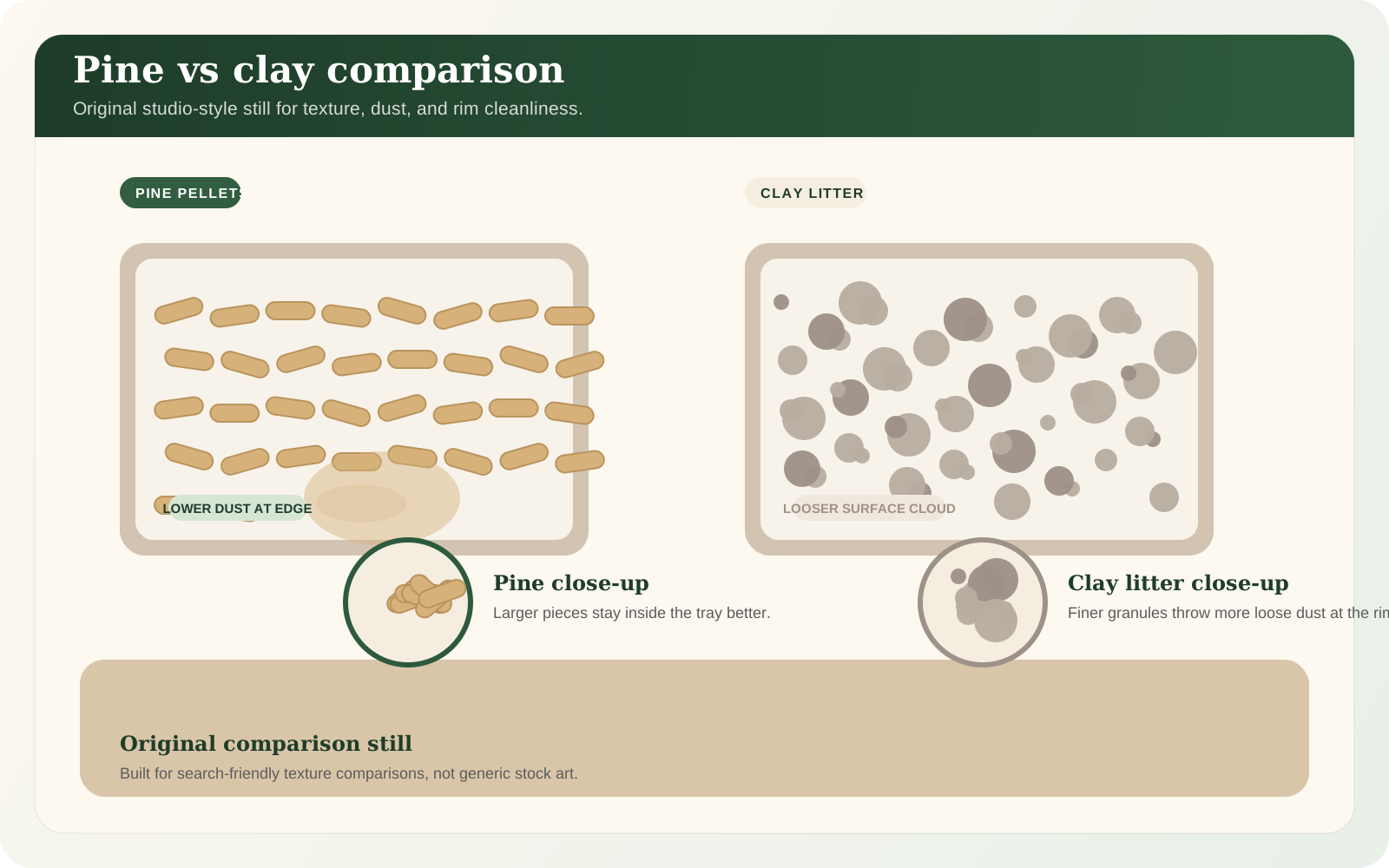
Pine pellets and clay litter side-by-side comparison illustration
Side-by-side illustration showing pellet size, surface dust, and the cleaner edge profile of pine.
Start with the evidence layer: our sourcing notes, setup trade-offs, review coverage, and the practical routines that make pine easier or harder to live with. Then decide whether pine fits your home.
This page names everyone who worked on it and cites its external sources. We run no laboratory and test no litter ourselves. The scope below shows what was checked before publication.
Product links can be affiliate links, and any commercial relationship is disclosed on-page.
Pine wood cat litter can be evaluated through odor control, dust, cleanup behavior, and transition friction. This site separates those questions so the science page, comparison page, review library, and setup guide each answer a different part of the decision.
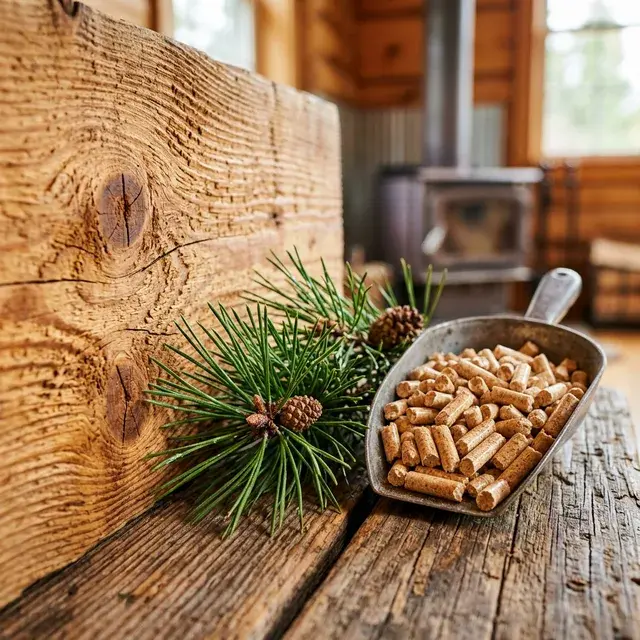
The science explainer focuses on mechanism, while our format assessment rates pine at 8.4-9/10 on odor versus 5.5/10 for clay.
The benefits guide covers the wood-byproduct sourcing case, where the trade-offs still matter, and where the site stops short of lifecycle claims.
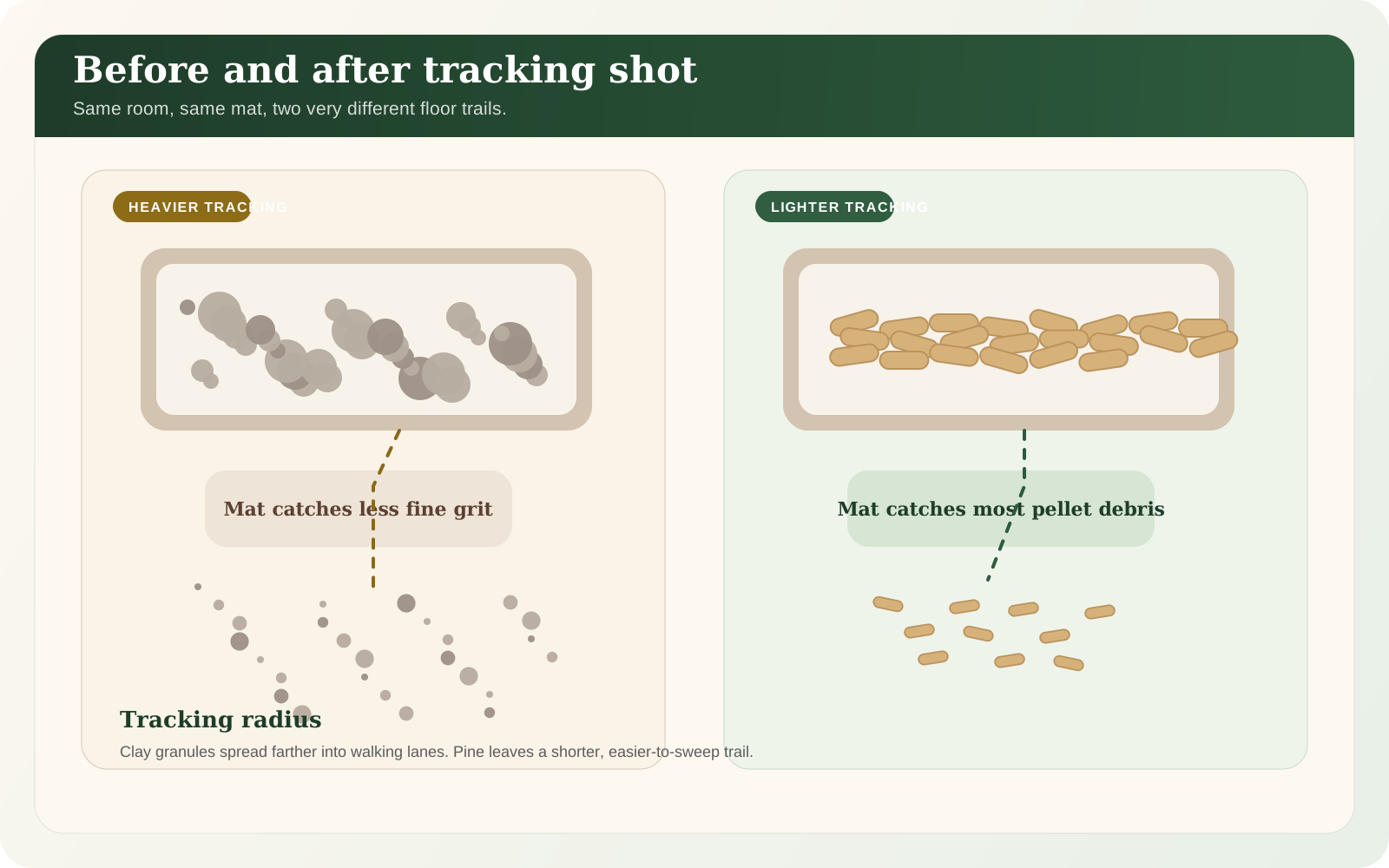
The comparison guide shows when pine’s lower tracking and carry weight help, and when clay, silica, or tofu may still be the better fit.
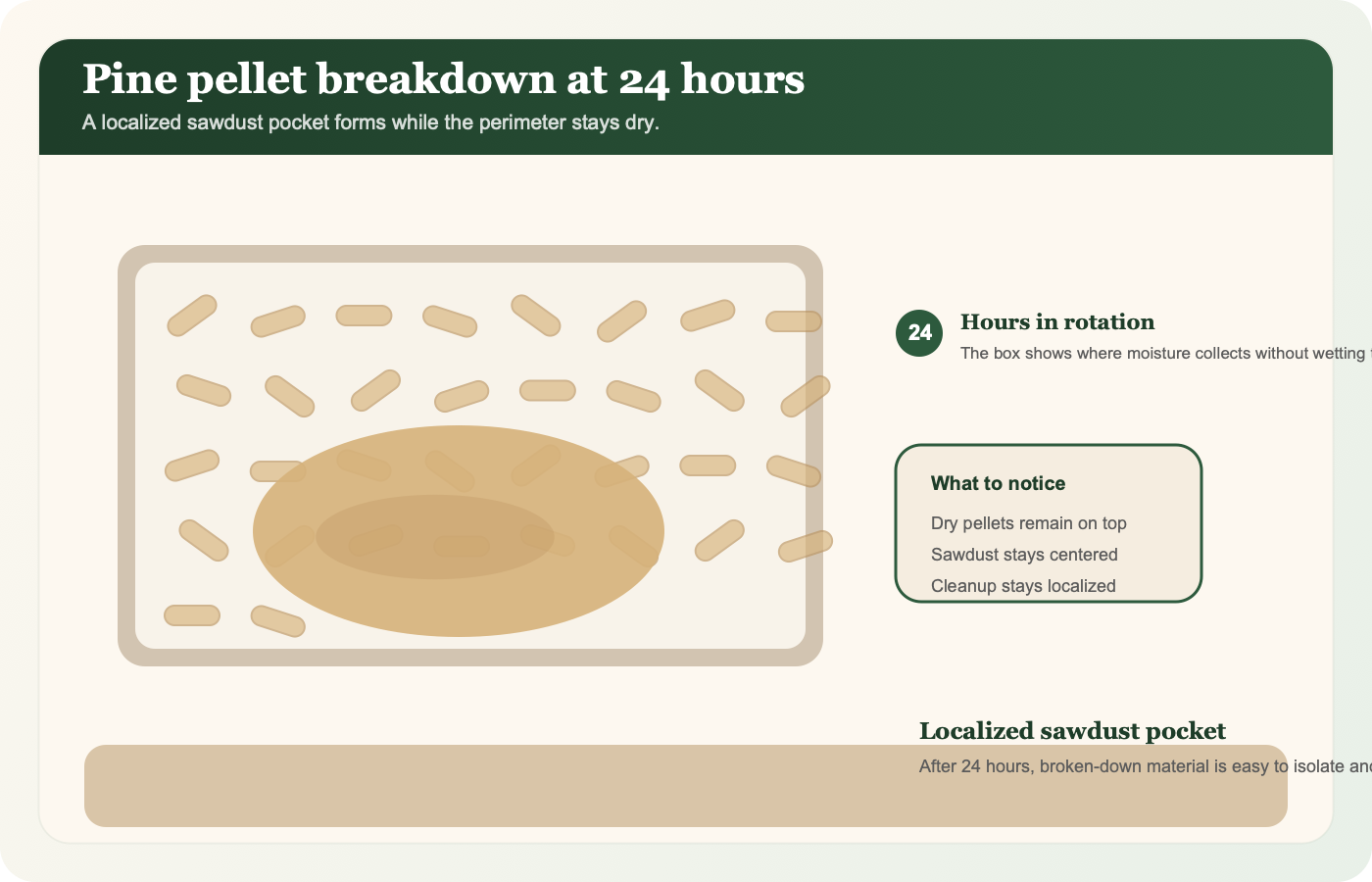
We drew our own illustrations instead of using generic product art: side-by-side comparisons, pellet breakdown sequences, tracking patterns, and short animated diagrams. They are drawings, not photographs of a test.
These illustrations explain texture, spread, and sawdust conversion in a format image search can understand.
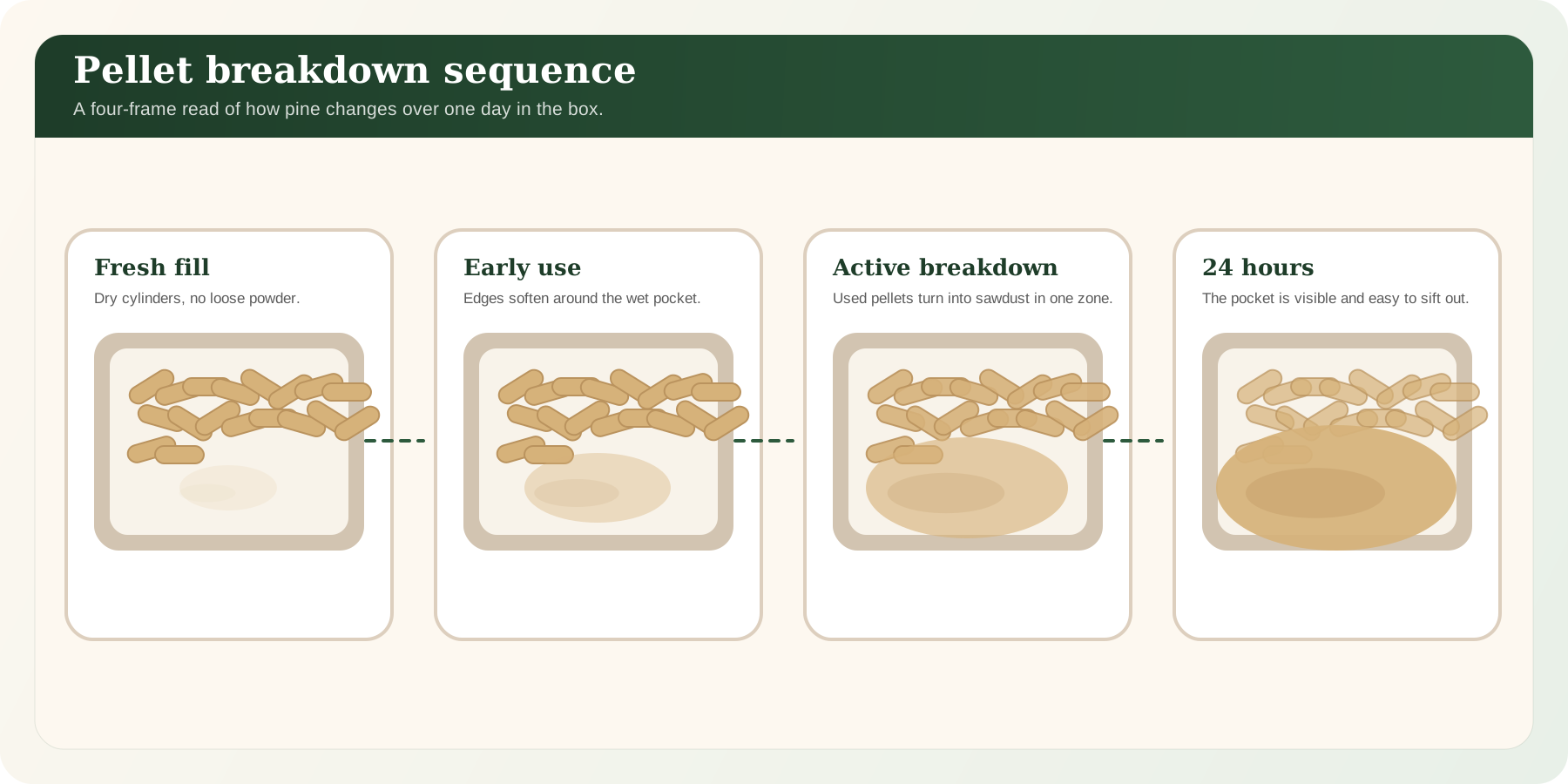
An animated illustration of the pellet lifecycle, drawn rather than filmed.
 Play demo
Traditional clay litters and natural pine litter solve different problems. The science explainer covers the material behavior, while the format comparison lays out how they score against each other.
See how wood-based cat litter stacks up against clay and other common litter types. Want to know how we arrive at these scores? Read our evaluation method, then continue to the full comparison guide.
Our pine litter fit finder turns a few household details into a real recommendation: the best pine format, the box setup that fits it, a transition schedule, and the evidence pages to read next.
Fine pine pellets + high-sided sifting box + 21-day switch.
Built for clay users in smaller spaces who need odor control without a messy floor.These pages answer the most practical pine-litter questions we hear after the overview articles: which box setup works best, and what to do when a cat resists the switch.
The contributor profiles, policies, and disclosures are part of the editorial path so readers can see who wrote the material and what commercial relationship exists.
These scenario pages turn the shared format assessment into practical starting points for apartments, multi-cat traffic, sensitive-air homes, and slower transitions. They help both readers and crawlers reach the high-intent content without relying on the site map alone.
The best pine litter for apartments controls odor in small spaces, tracks less on hard floors, and keeps dust low. See which setup tested best for tight layouts.
Pine litter can handle multi-cat homes when the maintenance cadence and box spacing match the traffic. See which setups tested strongest for odor and durability.
If your picky cat resists pine pellets, a gentler format and slower transition can make the difference. See which pine setup tested easiest for hesitant cats.
The best pine litter for asthma-sensitive homes starts with the lowest dust score. See which pine format and routine tested cleanest for indoor air quality.
The short version is here. Each answer points into the deeper evidence pages so the homepage can handle broad search intent without pretending one paragraph is the whole story.
We rate the pine formats above clay on odor control, but the better household choice still depends on box setup, cleanup cadence, and how well your cat accepts the texture.
The current pine entries scored cleaner on visible dust than the clay control, which is why the site often recommends pine for cleaner-air routines. Silica still led the full set on dust score, so pine is strong here without being the only low-dust option.
Texture transition is the main tradeoff with pine. The safer move is usually a slower bridge mix, stable box placement, and a refusal-specific troubleshooting plan rather than a hard overnight switch.
That depends on odor pressure, traffic, dust sensitivity, and your current box routine. The fit finder and scenario pages narrow those tradeoffs into a recommended pine format, box type, and transition pace.
If you are still comparing formats, keep moving through the full comparison, the product reviews, and the switching guidance before choosing what belongs in the box.